In the United States and abroad, ortho-phthalates and non-ortho-phthalate plasticizers continue to be used within a diverse array of consumer products. Prior California-specific biomonitoring programs for ortho-phthalates have focused on rural, agricultural communities and, to our knowledge, these programs have not measured the potential for exposure to non-ortho-phthalate plasticizers. Therefore, the potential for human exposure to ortho-phthalates and non-ortho-phthalate plasticizers have not been adequately addressed in regions of California that have higher population density. Since there are numerous sources of ortho-phthalates and non-ortho-phthalate plasticizers in population-dense, urban regions, the objective of this study was to leverage silicone wristbands to quantify aggregate ortho-phthalate and non-ortho-phthalate plasticizer exposure over a 5-day period across two different cohorts (2019 and 2020) of undergraduate students at the University of California, Riverside (UCR) that commute from all over Southern California.
Exposures to polyaromatic hydrocarbons (PAHs) contribute to cancer in the fire service. Fire investigators are involved in evaluations of post-fire scenes. In the US, it is estimated that there are up to 9000 fire investigators, compared to approximately 1.1 million total firefighting personnel. This exploratory study contributes initial evidence of PAH exposures sustained by this understudied group using worn silicone passive samplers.
E-waste recycling is an increasingly important activity that contributes to reducing the burden of end-of-life electronic and electrical apparatus and allows for the EU's transition to a circular economy. This study investigated the exposure levels of selected persistent organic pollutants (POPs) in workers from e-waste recycling facilities across Europe.
The concentrations of seven polychlorinated biphenyls (PCBs) and eight polybrominated diphenyl ethers (PBDEs) congeners were measured by GC-MS. Workers were categorized into five groups based on the type of e-waste handled and two control groups. Generalized linear models were used to assess the determinants of exposure levels among workers. POPs levels were also assessed in dust and silicone wristbands (SWB) and compared with serum.
Silicone wristbands are a noninvasive personal exposure assessment tool. However, despite their utility, questions remain about the rate at which chemicals accumulate on wristbands when worn, as validation studies utilizing wristbands worn by human participants are limited. This study evaluated the chemical uptake rates of 113 organic pollutants from several chemical classes (i.e., polychlorinated biphenyls (PCB), organophosphate esters (OPEs), alkyl OPEs, polybrominated diphenyl ethers (PBDEs), brominated flame retardants (BFR), phthalates, pesticides, and polycyclic aromatic hydrocarbons (PAHs) over a five-day period.
This study was designed to determine if silicone wristbands provide a quantitative estimate of internal dose for phenols commonly associated with PCPs, with a focus on triclosan and four parabens: methyl-, ethyl-, propyl-, and butylparaben. Uptake of these compounds into wristbands and correlations with internal dose were assessed.
Polycyclic aromatic hydrocarbons (PAHs) pose health risks to children, potentially resulting in stunted growth, obesity, and cognitive deficits, but lack of reliable and noninvasive means to measure PAHs results in poor understanding of exposure patterns and sources in this vulnerable population. In this study, 24 children aged ∼7 years (9 boys and 15 girls) from Montevideo, Uruguay wore silicone wristbands for 8 days to monitor the exposure of 27 PAHs. Wristbands were extracted using a modified ethyl acetate tandem solid phase extraction clean up and then analyzed via gas chromatography with tandem mass spectrometry.
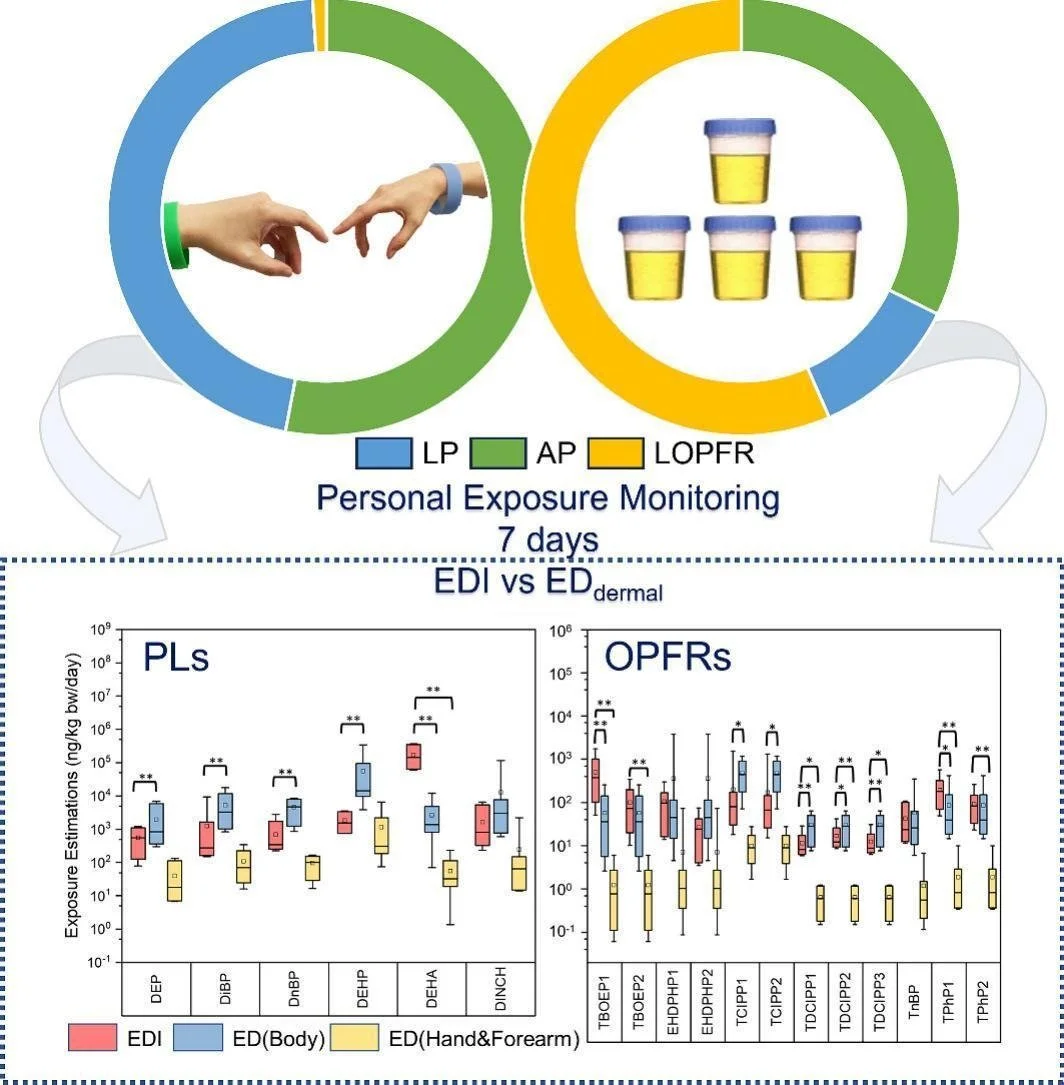
Plasticizers (PLs) and organophosphate flame retardants (OPFRs) are ubiquitous in the environment due to their widespread use and potential for leaching from consumer products. Environmental exposure is a critical aspect of the human exposome, revealing complex interactions between environmental contaminants and potential health effects. Silicone wristbands (SWBs) have emerged as a novel and non-invasive sampling device for assessing personal external exposure. In this study, SWBs were used as a proxy to estimate personal dermal adsorption (EDdermal) to PLs and OPFRs in Belgian participants for one week; four morning urine samples were also collected and analyzed for estimated daily intake (EDI).
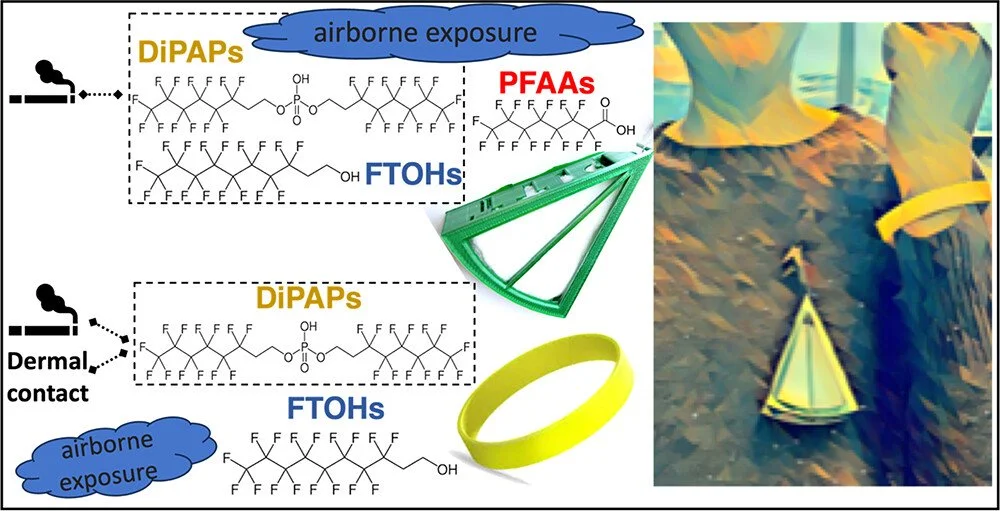
Per- and polyfluoroalkyl substances (PFAS) are ubiquitously detected in the environment, raising concerns about human exposure. The assessment of individual exposure to PFAS has been limited due to the lack of specialized sampling tools. Personal wearable samplers, including silicone wristbands, have been used for PFAS exposure assessment.
Rural residents are exposed to both particulate and gaseous pesticides in the indoor-outdoor nexus in their daily routine. However, previous personal exposure assessment mostly focuses on single aspects of the exposure, such as indoor or gaseous exposure, leading to severe cognition bias to evaluate the exposure risks. In this study, residential dust and silicone wristbands (including stationary and personal wearing ones) were used to screen pesticides in different phases and unfold the hidden characteristics of personal exposure via indoor-outdoor nexus in intensive agricultural area. Mento-Carlo Simulation was performed to assess the probabilistic exposure risk by transforming adsorbed pesticides from wristbands into air concentration, which explores a new approach to integrate particulate (dust) and gaseous (silicone wristbands) pesticide exposures in indoor and outdoor environment.
Polycyclic aromatic hydrocarbons (PAHs) are an important component of urban air pollution. This study aimed to evaluate personal exposure to atmospheric PAHs in teachers working and residing in El Paso, Texas. Methods: Study participants carried air monitoring equipment in a backpack and wore silicone wristbands over a 24-hour period to serve as active and passive samplers, respectively. Results: Of the 25 PAHs measured, 23 compounds were detected in the filters, and 16 compounds were detected in the wristbands. Phenanthrene and naphthalene were the most abundant PAHs sequestered in both matrices. The filters captured more high molecular weight PAHs, whereas the wristbands captured more low molecular weight PAHs.
In a recent estimate, 96 million tons of hazardous waste were produced in the European Union, most of which were handled among the member states. Organophosphate esters (OPEs) are applied as flame retardants and plasticizers and are present in many products, e.g., electronics, which end up in the hazardous waste stream upon disposal. Given the growing body of information suggesting potential adverse health effects of OPEs, waste recycling workers who handle hazardous waste could potentially be at risk of elevated exposure to these chemicals.
Firefighters experience exposures to carcinogenic and mutagenic substances, including polycyclic aromatic hydrocarbons (PAHs). Silicone wristbands (SWBs) have been used as passive samplers to assess firefighters' exposures over the course of a shift but their utility in measuring short term exposures, source of exposure, and correlations with other measurements of exposure have not yet been investigated.
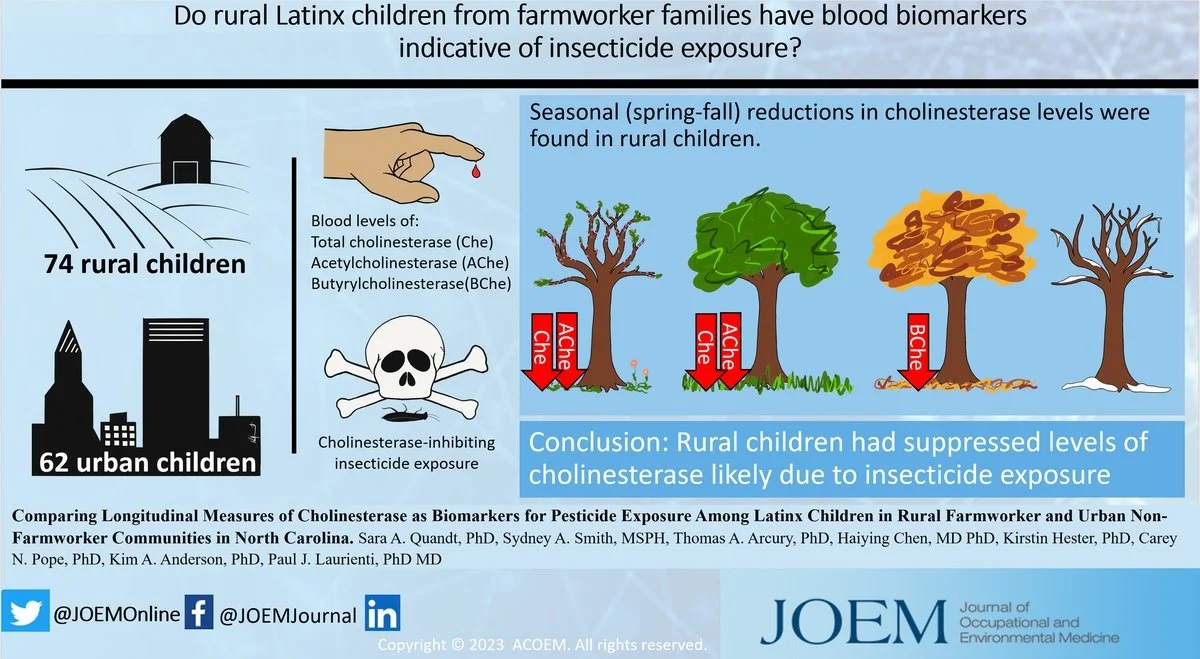
In a 2-group prospective design, this study compared seasonal cholinesterase levels of Latinx children in rural farmworker families and comparable urban children to assess the impact of environmental exposure to cholinesterase-inhibiting insecticides.
The intersectional risks of children in United States immigrant communities include environmental exposures. Pesticide exposures and their biological outcomes are not well characterized in this population group.
The use of passive sampling devices (PSDs) as an appropriate alternative to conventional methods of assessing human exposure to environmental toxicants was studied. One-time purposive sampling by a silicone wristband was used to measure insecticide residues in 35 volunteer pepper farmers in the Vea irrigation scheme in the Guinea savannah and the Weija irrigation scheme in the coastal savannah ecological zones of Ghana. A GC-MS/MS method was developed and validated for quantifying 18 insecticides used by farmers in Ghana.
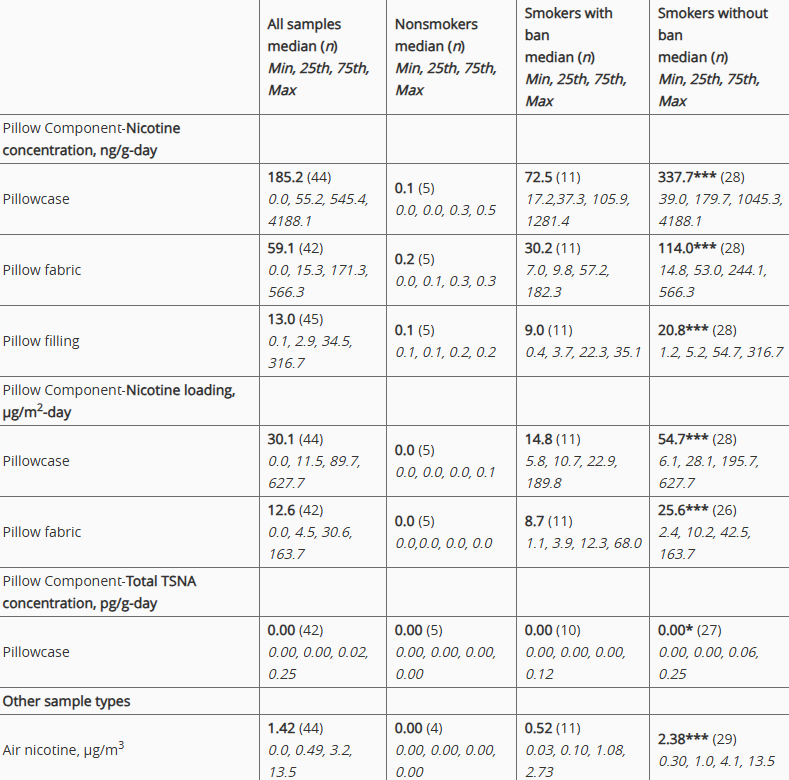
Secondhand smoke (SHS) exposure is a major cause of illnesses in children and leaves a persistent and toxic residue indoors called thirdhand smoke (THS) that adheres to various surfaces, permeates materials, accumulates in household dust, and is subsequently re-emitted into the air. THS, like SHS, has been shown to contain multiple toxic chemicals, including carcinogenic tobacco-specific nitrosamines (TSNAs). Children are highly susceptible to tobacco smoke pollutants, and simple methods for assessing children’s SHS and THS exposure are needed. Therefore, we evaluated the performance of a cotton pillow used as a passive sampler in homes of children with caregivers who smoke tobacco, with and without home smoking bans, as well as nonsmokers.
Exposure to pesticides in humans may lead to changes in brain structure and function and increase the likelihood of experiencing neurodevelopmental disorders. Despite the potential risks, there is limited neuroimaging research on the effects of pesticide exposure on children, particularly during the critical period of brain development. Here we used voxel-based morphometry (VBM) and diffusion tensor imaging (DTI) from magnetic resonance images (MRI) to investigate neuroanatomical differences between Latinx children (n = 71) from rural, farmworker families (FW; n = 48) and urban, non-farmworker families (NFW; n = 23).
There are concerns over traffic-related air pollution in Uganda’s capital, Kampala. Individuals in the transportation sector are hypothesized to be at greater risk for exposure to volatile organic compounds, given their proximity to vehicle exhaust. Silicone wristbands are a wearable technology that passively sample individuals’ chemical exposures.
Wearable silicone wristbands are a rapidly growing exposure assessment technology that offer researchers the ability to study previously inaccessible cohorts and have the potential to provide a more comprehensive picture of chemical exposure within diverse communities. However, there are no established best practices for analyzing the data within a study or across multiple studies, thereby limiting impact and access of these data for larger meta-analyses. We utilize data from three studies, from over 600 wristbands worn by participants in New York City and Eugene, Oregon, to present a first-of-its-kind manuscript detailing wristband data properties.
Silicone wristbands were utilized as personal passive samplers in a sub-cohort of 92 women, who participated in New York University Children's Health and Environment Study, to assess exposure to semi-volatile organic compounds (SVOCs). Wristbands were analyzed for 77 SVOCs, including halogenated and non-halogenated organophosphate esters (OPEs), polychlorinated biphenyls (PCBs), pesticides, phthalates, and brominated flame retardants (BFRs) (e.g. polybrominated diphenyl ethers (PBDEs)).