Reporting personal environmental exposure data back from researchers to study participants is becoming more common, however there are few tools to assess whether report back increases environmental health literacy (EHL). This study assessed whether sociodemographic or environmental characteristics were associated with changes in EHL after receiving personal air monitoring results.
Four main themes emerged from analysis of the transcripts: (1) views on the report layout; (2) expression of concern over how chemicals might impact their individual or community health; (3) participants emotional response towards the researchers; and (4) participants ability to comprehend and evaluate environmental health information. Evaluation of the report and key concerns differed across the three focus groups. However, there was agreement amongst the focus groups about the desire to obtain personal exposure results despite the uncertainty of what the participant results meant.
Chlorinated paraffins (CPs) are a major environmental concern due to their ubiquitous presence in the environment. Since human exposure to CPs can significantly differ among individuals, it is essential to have an effective tool for monitoring personal exposure to CPs. In this pilot study, silicone wristbands (SWBs) were employed as a personal passive sampler to measure time-weighted average exposure to CPs.
It has been suggested that domestic animals can serve as sentinels for human exposures. In this study our objectives were to demonstrate that i) silicone collars can be used to measure environmental exposures of (domestic) animals, and that ii) domestic animals can be used as sentinels for human residential exposure. For this, we simultaneously measured polycyclic aromatic hydrocarbons (PAHs) using silicone bands worn by 30 pet cats (collar) and their owner (wristband).
This study uses repeated measures to document the pesticide exposure of rural and urban Latinx children (age eight at baseline), and to compare these children in terms of the frequency and concentration of their exposure to a large set of pesticides, accounting for season. We used silicone wristbands worn for one week up to ten times at quarterly intervals from 2018 to 2022 to assess pesticide exposure in children from rural farmworker (n = 75) and urban non-farmworker (n = 61) families.
This pilot study aims to use silicone passive sampling to assess improvements in dermal protection afforded by a novel configuration of PPE, which incorporates a one-piece liner to eliminate gaps in two critical interfaces between pieces of gear. The study compared protection against parent and alkylated PAHs between the one-piece liner PPE and the standard configuration of PPE with traditional firefighting jacket and pants.
Humans are exposed to increasingly complex mixtures of hormone-disrupting chemicals from a variety of sources, yet, traditional research methods only evaluate a small number of chemicals at a time.
Hurricane Harvey was a category four storm that induced catastrophic flooding in the Houston metropolitan area. Following the hurricane there was increased concern regarding chemical exposures due to damage caused by flood waters and emergency excess emissions from industrial facilities.
Wearing a silicone wristband exposes the internal surface of the wristband to glucose, lipids, and metabolites (metabolome) found in sweat and the external surface to occupational and environmental factors that could impact health found in the air (exposome). We use silicone wristband electrospray ionization mass spectrometry (SWESI-MS) to monitor these species.
As part of the ICARUS (Integrated Climate forcing and Air pollution Reduction in Urban Systems) H2020 EU project, sampling campaigns took place in seven European cities (Athens, Basel, Brno, Ljubljana, Madrid, Milan, Thessaloniki), aiming to characterize urban population exposure to air pollutants, altogether with over 600 participants from over 250 households. By combining spatio-temporal information on air pollution and activity data of individuals, we were able to identify individual exposure profiles and to aggregate information according to specific micro-environments and activity
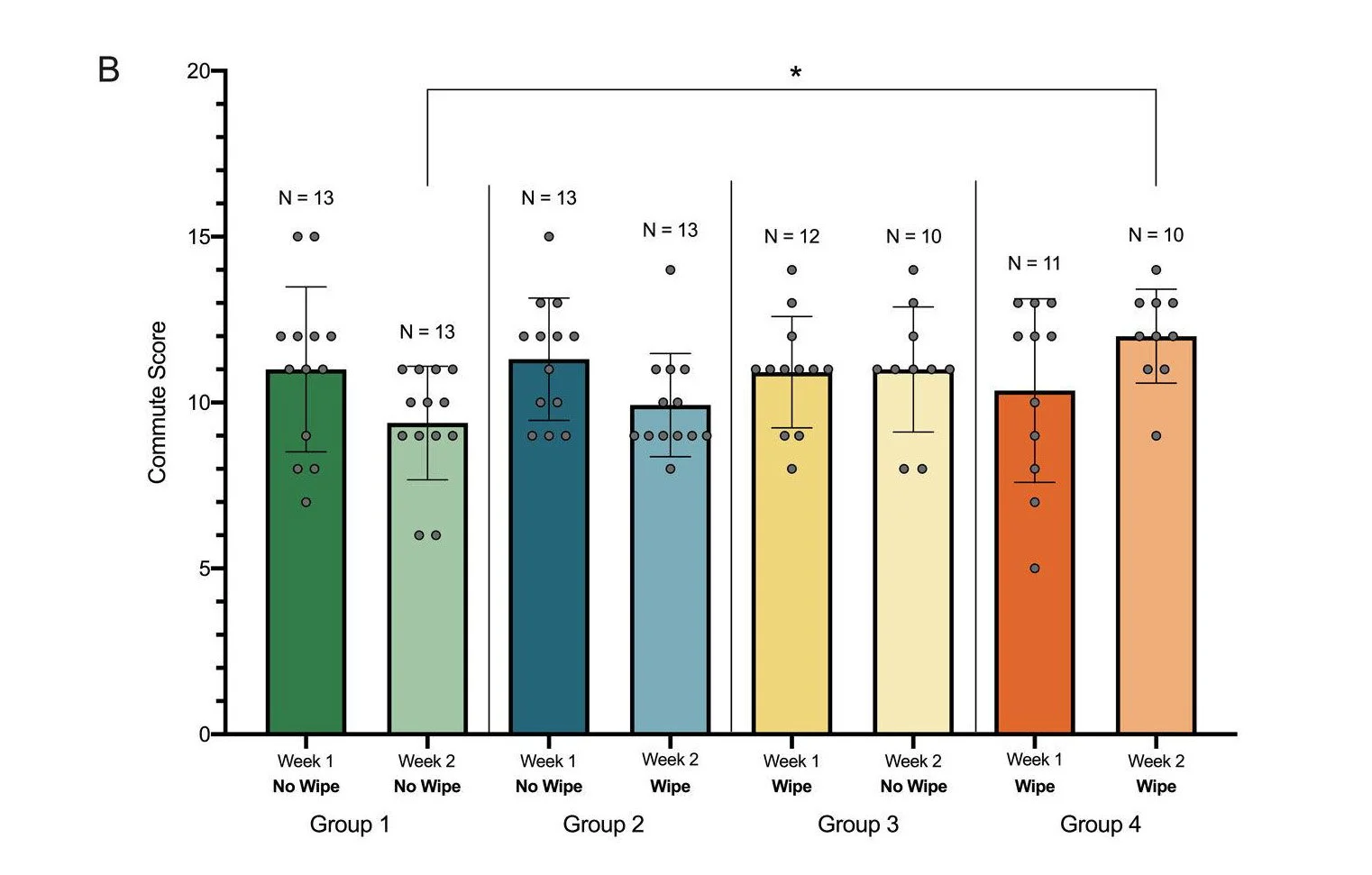
Participants (N = 49) were asked to wear silicone wristbands, and a subset of them wiped interior parts at the front of their vehicles prior to one study week (N = 25) or both study weeks (N = 11).
Silicone wristbands act as passive environmental samplers capable of detecting and measuring concentrations of a variety of chemicals. They offer a noninvasive method to collect complex exposure data in large-scale epidemiological studies.
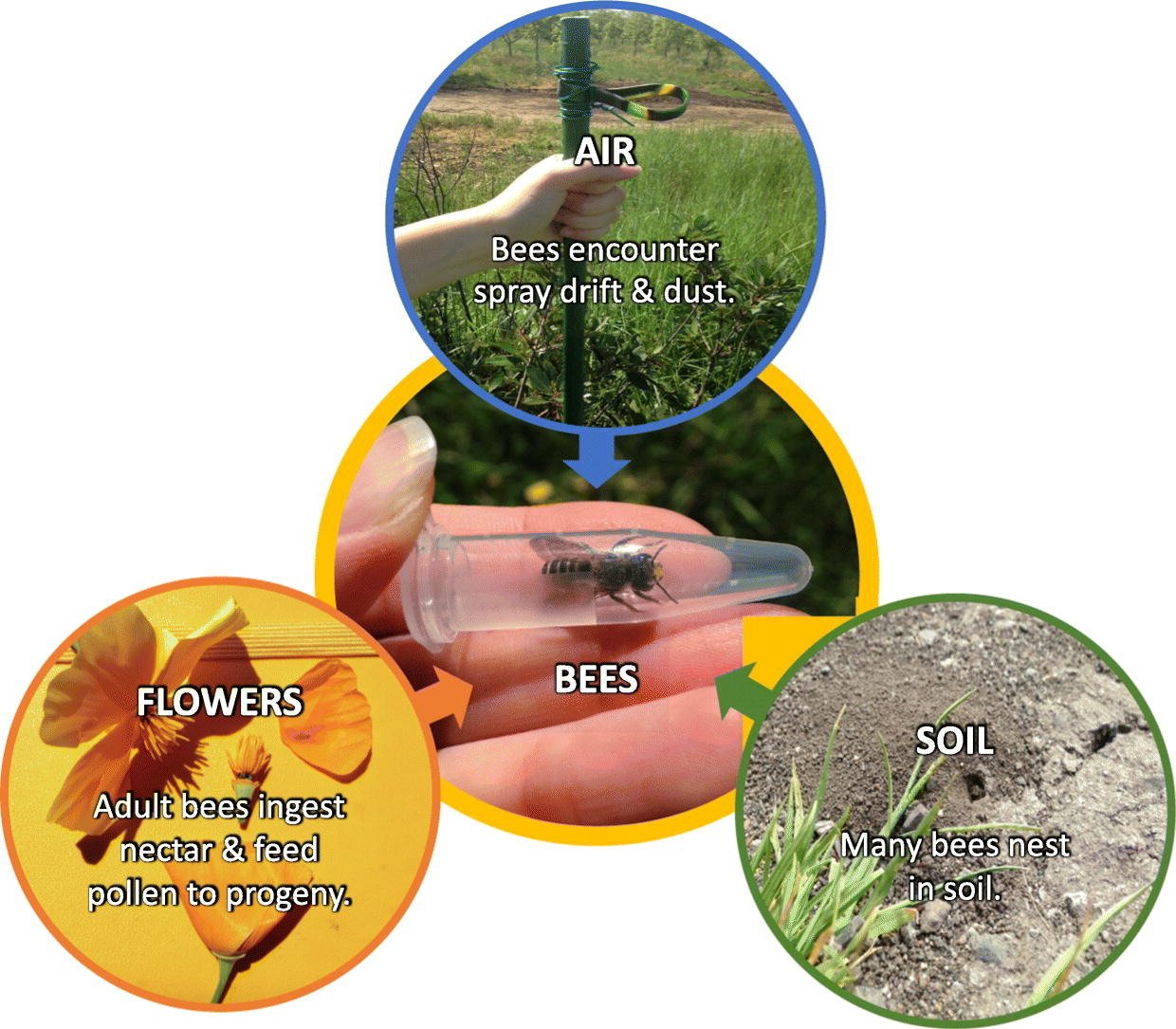
Bees are critical for food crop pollination, yet their populations are declining as agricultural practices intensify. Pollinator-attractive field border plantings (e.g. hedgerows and forb strips) can increase bee diversity and abundance in agricultural areas; however, recent studies suggest these plants may contain pesticides.
Personal chemical exposure assessment is necessary to determine the frequency and magnitude of individual chemical exposures, especially since chemicals present in everyday environments may lead to adverse health outcomes. In the last decade, silicone wristbands have emerged as a new chemical exposure assessment tool and have since been utilized for assessing personal exposure to a wide range of chemicals in a variety of populations.
Pesticide exposure remains a health hazard despite extensive study into adverse effects. Children in vulnerable populations, such as Latinx children in farmworker families, are particularly at risk for exposure. Several studies have demonstrated the detrimental cognitive effects of prenatal exposure to pesticides, particularly organophosphates (OPs) within this high-risk group.
Hurricane Harvey was associated with flood-related damage to chemical plants and oil refineries, and the flooding of hazardous waste sites, including 13 Superfund sites. As clean-up efforts began, concerns were raised regarding the human health impact of possible increased chemical exposure resulting from the hurricane and subsequent flooding.
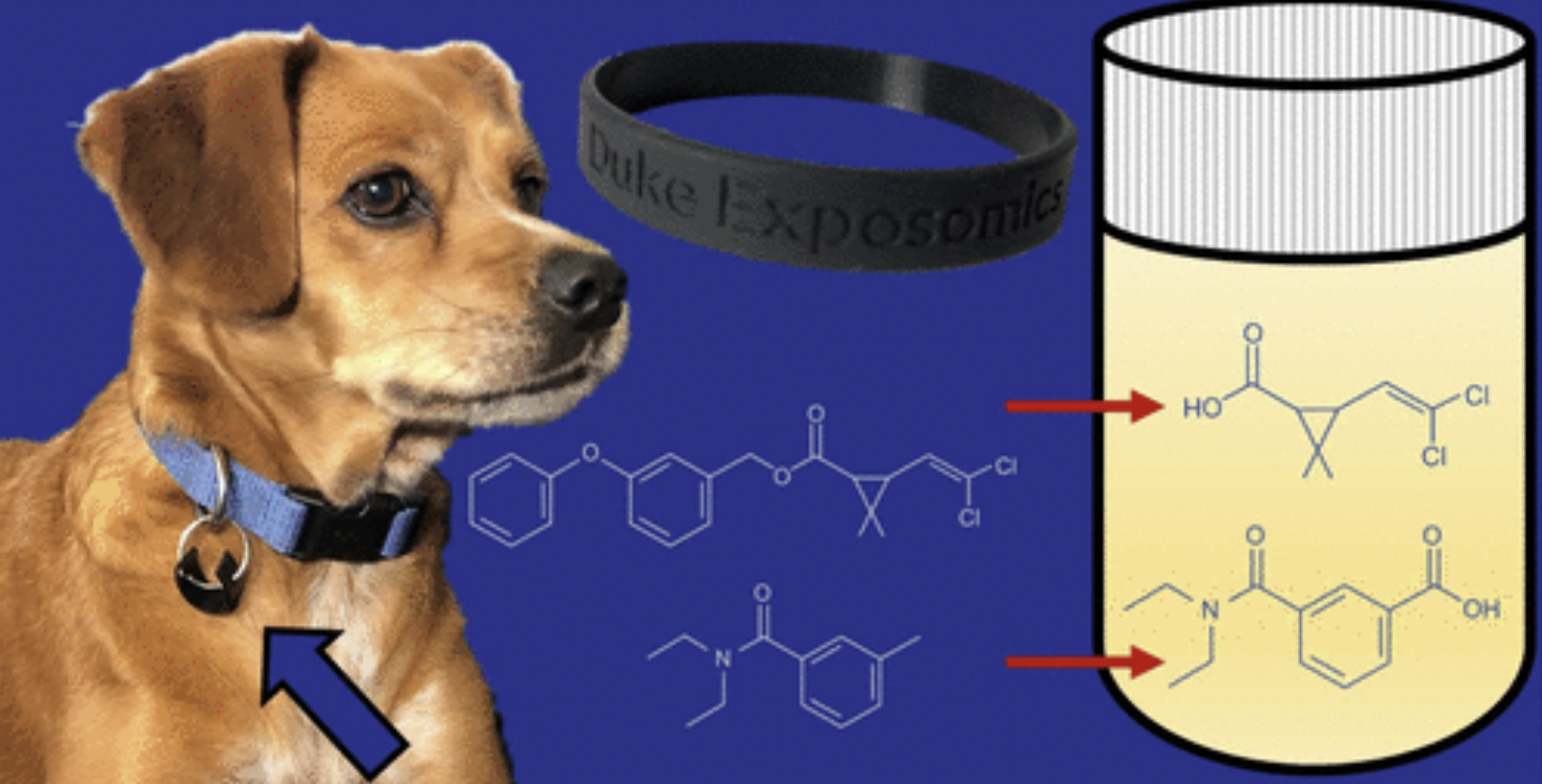
Pesticides are used extensively in residential settings for lawn maintenance and in homes to control household pests including application directly on pets to deter fleas and ticks. Pesticides are commonly detected in the home environment where people and pets can be subject to chronic exposure.
Using silicone wristbands (SWBs) to measure personal chemical exposures is an approach less than 7 years old [1], but is becoming more widely used in the last 2 years [2,3,4,5,6,7,8,9,10,11,12,13,14]. SWBs have been found to have high compliance even among children [15, 16], and have been found to correlate well with internal biomarkers of exposure from urine and blood sampling [17,18,19]. Most research endeavors using SWBs measure volatile organic compounds (VOCs) or semi-volatile organic compounds (SVOCs) and analyze results from the passive sampling extracts without estimating environmental concentrations during exposure. While there are multiple routes of exposure that SWBs may capture [1, 5, 20], even attempting to estimate air concentrations are often left out of current research. Models and equations used to estimate environmental concentrations from passive sampling can be challenging to use in practice, which then leaves many researchers more inclined to rely on extract concentration data exclusively.
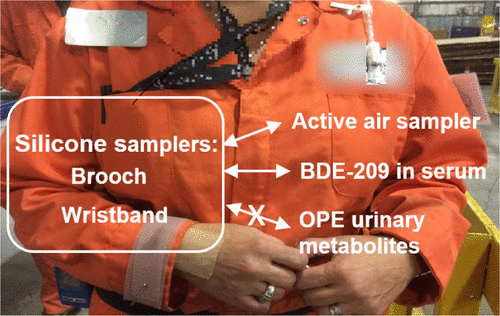
Silicone passive samplers were assessed for measuring personal exposure to 37 flame retardants at three Québec e-waste recycling facilities. Silicone brooches (n = 45), wristbands (n = 28), and armbands (n = 9) worn during a ∼8 h work shift accumulated detectable amounts of 95–100% of the target compounds. Brooch concentrations were significantly correlated with those from active air samplers from which we conclude that the brooches could be used to approximate inhalation exposure and other exposures related to air concentrations such as dermal exposure. The generic sampling rate of the brooch (19 ± 11 m3 day–1 dm–2) was 13 and 22 times greater than estimated for home and office environments, respectively, likely because of the dusty work environment and greater movement of e-waste workers. BDE-209 concentrations in brooches and wristbands were moderately and significantly (p < 0.05) correlated with levels in blood plasma; organophosphorus esters in brooches and wristbands were weakly and insignificantly correlated with their metabolite biomarkers in post-shift spot urine samples. Silicone brooches and wristbands deployed over a single shift in a dusty occupational setting can be useful for indicating the internal exposure to compounds with relatively long biological half-lives, but their use for compounds with relatively short half-lives is not clear and may require either a longer deployment time or an integrated biomarker measure.
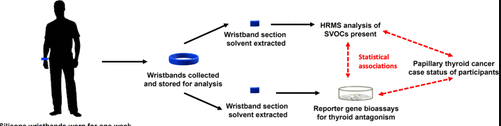
Research suggests that thyroid cancer incidence rates are increasing, and environmental exposures have been postulated to be playing a role. To explore this possibility, we conducted a pilot study to investigate the thyroid disrupting bioactivity of chemical mixtures isolated from personal silicone wristband samplers within a thyroid cancer cohort. Specifically, we evaluated TRβ antagonism of chemical mixtures extracted from wristbands (n = 72) worn by adults in central North Carolina participating in a case–control study on papillary thyroid cancer. Sections of wristbands were solvent-extracted and analyzed via mass spectrometry to quantify a suite of semivolatile chemicals. A second extract from each wristband was used in a bioassay to quantify TRβ antagonism in human embryonic kidney cells (HEK293/17) at concentrations ranging from 0.1 to 10% of the original extract (by volume). Approximately 70% of the sample extracts tested at a 1% extract concentration exhibited significant TRβ antagonism, with a mean of 30% and a range of 0–100%. Inhibited cell viability was noted in >20% of samples that were tested at 5 and 10% concentrations. Antagonism was positively associated with wristband concentrations of several phthalates, organophosphate esters, and brominated flame retardants. These results suggest that personal passive samplers may be useful in evaluating the bioactivities of mixtures that people contact on a daily basis. We also report tentative associations between thyroid receptor antagonism, chemical concentrations, and papillary thyroid cancer case status. Future research utilizing larger sample sizes, prospective data collection, and measurement of serum thyroid hormone levels (which were not possible in this study) should be utilized to more comprehensively evaluate these associations.