
Tracking toxic chemical exposure in Uganda: Insights from silicone wristbands
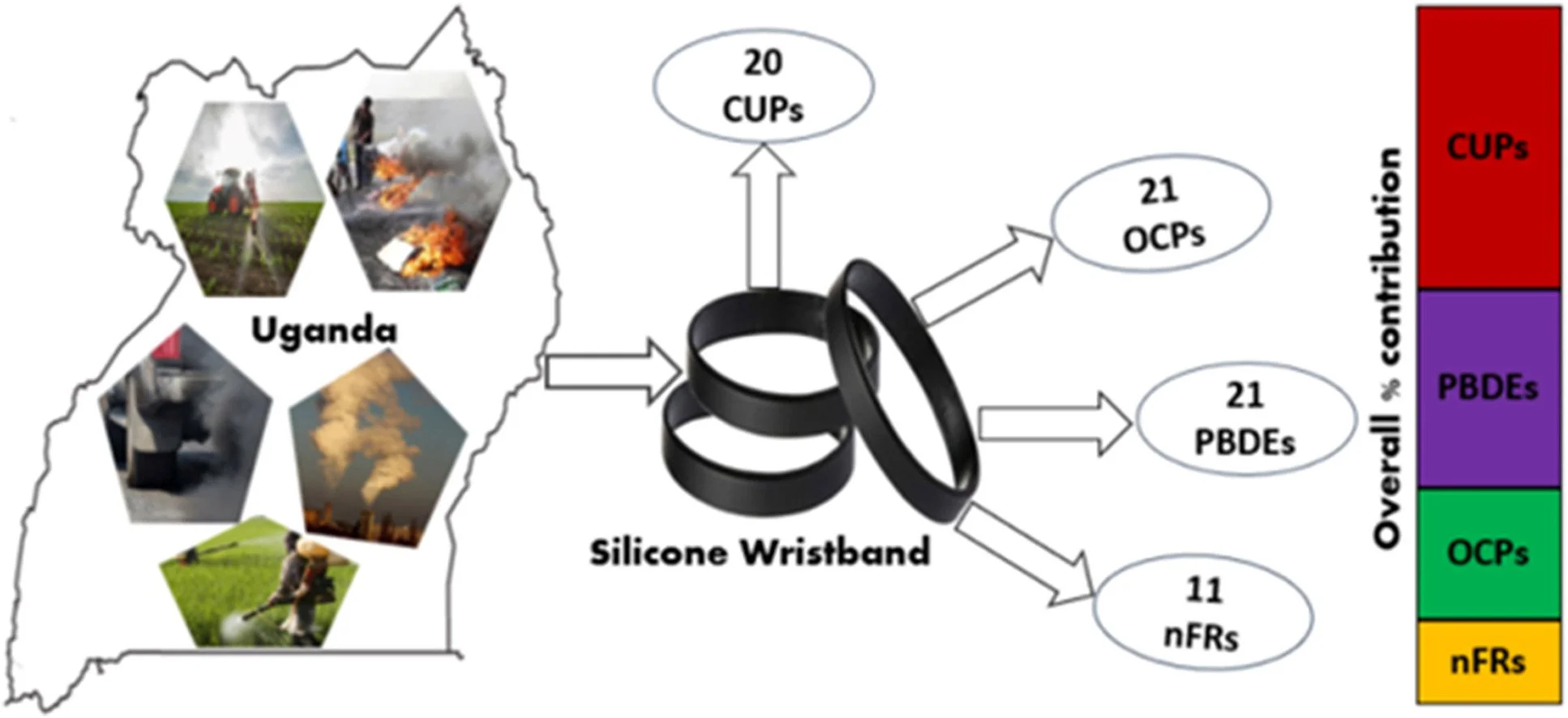
The increasing use of synthetic chemicals, including pesticides for agriculture and flame retardants from consumer products like electronics, raises environmental concerns for public health and biodiversity, particularly in agricultural and rural communities. Although these chemicals have been extensively studied in industrialized regions, data on human exposure particulary near protected areas in sub-Saharan Africa, remain scarce. This study provides novel insights into chemical exposure among different occupational groups in Uganda using silicone wristbands. We collected 39 silicone wristbands from participants living around Kibale National Park, including tea workers (n = 8), researchers (n = 10), commercial farmers (n = 6), subsistence farmers (n = 7), and urban workers (n = 8), and analyzed for 21 polybrominated biphenyl ethers (PBDEs), 11 novel flame retardants (nFRs), 20 current-use pesticides (CUPs), and 21 organochlorine pesticides (OCPs). CUPs the most abundant chemicals detected (range 18.2–54.4 ng/g), were significantly higher for commercial and subsistence farmers and tea workers. Urban workers and researchers had higher levels of PBDEs and nFRs than the other three groups with BDE-47, -99, −139, −153, −209, bis (2-ethylhexyl) tetrabromophthalate (BETHTBP) and decabromodiphenylethane (DBDPE) being the most detected compounds. Ametryn, β-HCH, o,p’-DDT, p,p’-DDT, and endosulfan sulfate were the most frequently detected pesticides. The widespread detection of legacy and emerging chemicals at levels similar to urban and industrialized areas among populations near a protected area in Eastern Africa highlights an urgent environmental and public health concern.