
Translating Silicone Wristbands to a Personal Exposure Estimate for Dermal Absorption: A Case Study with PCBs
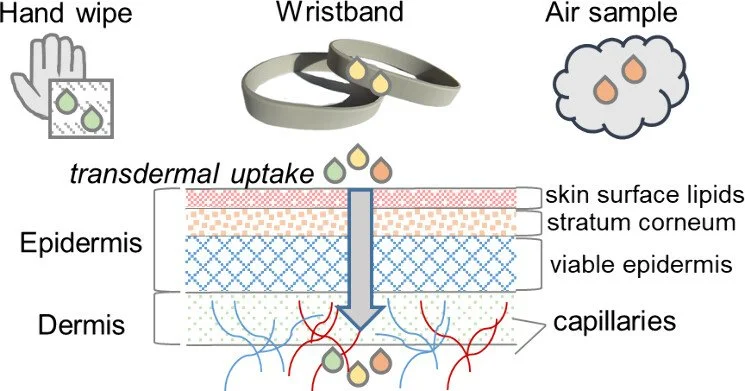
Dermal absorption is an exposure pathway frequently underestimated due to challenges in quantifying how exogenous chemicals pass through skin. Silicone wristbands have been used as effective personal passive sampling tools for semivolatile organic compounds (SVOCs) and serve as integrated measures of inhalation and dermal exposures. However, to-date, translating SVOC concentrations in wristbands to estimated doses has been a gap for their application in exposure assessment. Here, we utilized wristbands as proxy measures for skin-surface lipids to calculate estimated daily intakes (EDIs) from the dermal absorption pathway. EDIs were compared to dermal uptake estimates previously calculated from indoor air measurements and hand wipes, which were collected from residents of both polychlorinated biphenyl (PCB)-contaminated and noncontaminated buildings. Wristband-based estimates showed strong agreement with those from air and hand wipes (rs > 0.8, p < 0.0001), particularly for lower chlorinated PCBs, with dermal uptake accounting for a third of exposed residents’ PCB exposure (∑7PCB = 29.2 ng/kg bodyweight/day). All three dermal estimates were significantly associated with serum measurements among the lower chlorinated congeners. Our results demonstrate wristbands’ potential for quantifying personal external exposure, building on their utility for ranking internal dose. This study further presents a method for using wristbands to calculate dermal absorption for personalized exposure assessment.