
Characterization of aggregated exposure to multiple pesticides near agricultural fields: an application of silicone wristbands
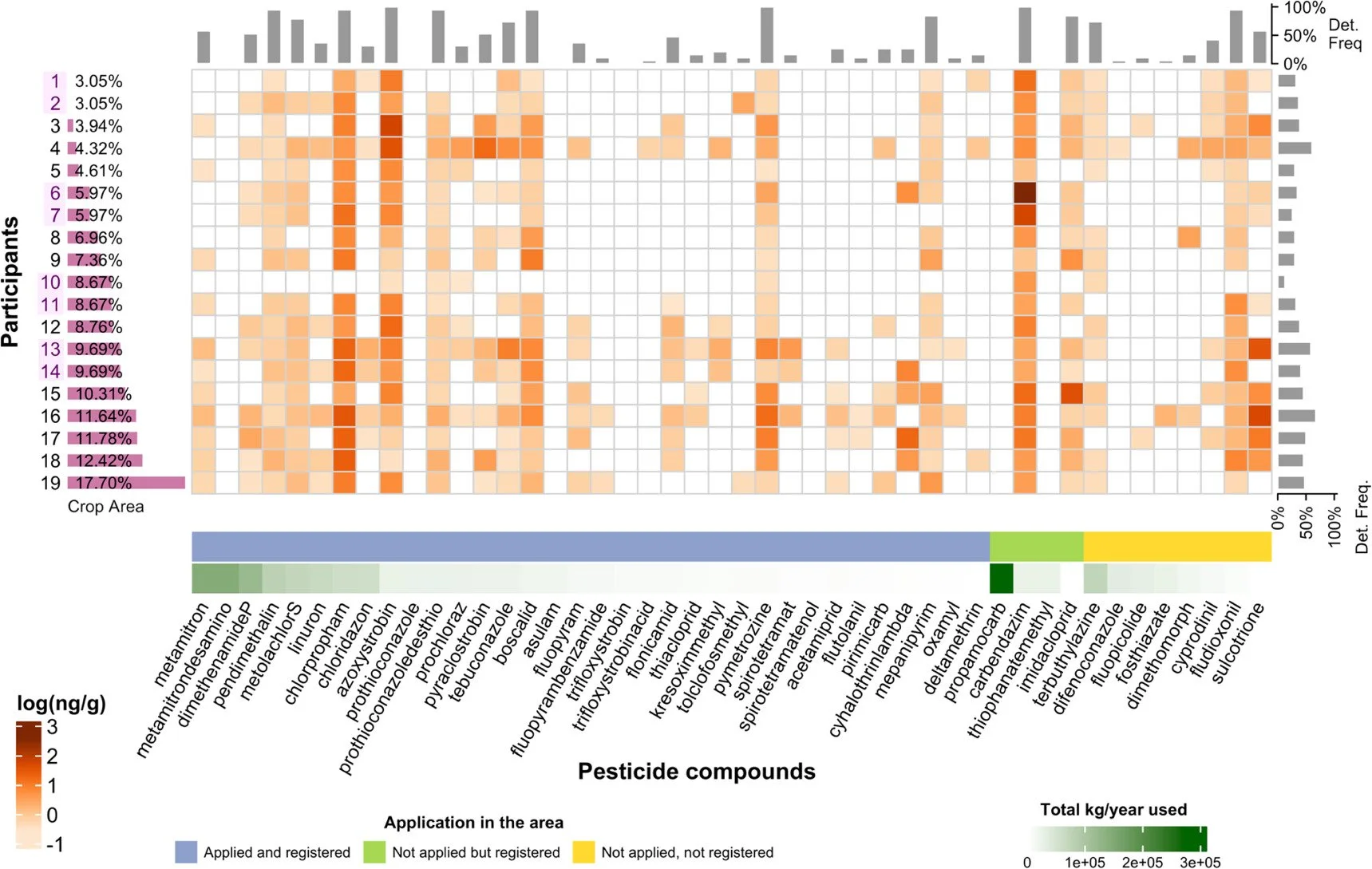
Public health concerns exist regarding pesticide exposure of workers and residents living near agricultural fields. Still, knowledge is limited in part due to the difficulties of assessing cumulative personal exposure to pesticides over time, as well as the total aggregate exposure. Silicone wristbands are a low-cost and non-invasive passive sampling tool to assess exposure to multiple pesticides. In this study, 19 residents living close to flower bulb fields in the Netherlands wore wristbands for an average of 60 days (range: 38–155). 31 different pesticides were quantified in the wristbands via liquid chromatography with tandem mass spectrometry (LC-MS/MS). For interpretation purposes of potential patterns of exposure the pesticides were categorized by their application status: 1) applied during the study period, 2) registered for usage on flower bulbs but not applied during the study period, 3) not applied and not registered. Measured concentrations reflected highly individualized exposure profiles over a long-term measurement period. The minimum number of pesticides that were detected in a wristband was 6, with an average of 19 (maximum: 31). Azoxystrobin, carbendazim and pymetrozine were detected in all wristbands. While carbendazim was not applied during the study period, it was authorized for spraying on bulb fields. No distinction could be made between wristbands with days of wearing, vapor pressure or soil half-life of the pesticides. Using wristbands, we efficiently assessed pesticide mixture exposure profiles. The co-occurrence of pesticides in the wristbands allowed the identification of realistic chemical mixtures in residents living near agricultural fields. This study demonstrates the potential of wristbands to assess a large number of pesticides over an extended period of time independent of the source of exposure. Due to their low-cost and non-invasive nature, wristbands could be applied in larger populations, combined with the ability to detect a large number of pesticides over time, this methodology could be informative for future environmental health, toxicology, and exposome studies, as well as regulators.