
Chemical & Engineering News Article by Priyanka Runwal
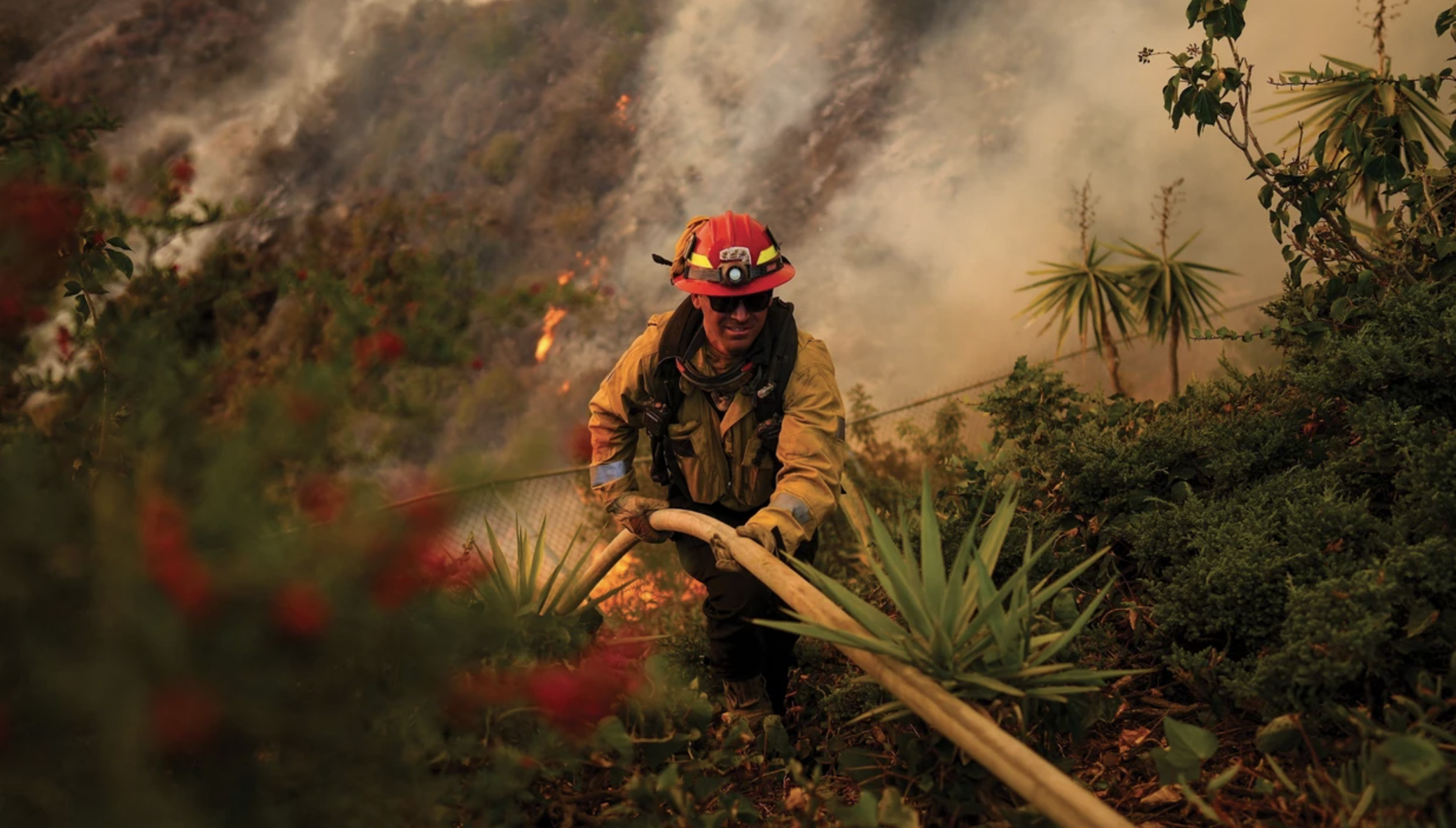
After unprecedented wildfires ripped through homes, businesses, and schools in the Los Angeles area earlier this year, Stephen Spriggs and his crew of firefighters took over. The Eaton and Palisades wildfires—among the most destructive in California’s history—killed 31 people and destroyed more than 15,000 buildings. The devastation was surreal, says Spriggs, a captain with the Los Angeles Fire Department (LAFD). “It was shocking to see.”
…
Such areas at the wildland-urban interface are at high risk for wildfires. The blazes can turn particularly destructive because of the flammable plastics and electronic parts in modern homes that fuel these fires. And when such plastics and electronic materials burn, they release toxic chemicals into the air. Firefighters working at the front line to control and extinguish wildfires are exposed to dozens of potentially dangerous compounds that can increase their chances of developing cancer, cardiovascular disease, and early death.
“That's the biggest danger of our job now,” Spriggs says. “It’s not so much the fire [per se], but it’s what’s burning.”
To assess wildland firefighters’ exposures, researchers use stationary and portable air monitors that measure certain hazardous pollutants emitted during wildfires. They also analyze firefighters’ blood, urine, and skin swab samples for metabolites of dangerous chemicals and other biomarkers that indicate exposure.
But “smoke being a very complex chemical mixture, it’s very hard to measure all the exposures they have,” says Jeff Burgess, director of the Center for Firefighter Health Collaborative Research at the University of Arizona. Another challenge is that biomonitoring may be unreliable for detecting exposures to carcinogens such as formaldehyde—a volatile organic compound that’s abundantly emitted during wildfires but also produced in small amounts by our bodies as part of normal metabolic processes.
Researchers are now asking wildland firefighters to wear silicone wristbands that absorb organic chemicals in the environment. They hope to use these low-cost, noninvasive, passive detectors as an additional tool to track the array of potentially harmful compounds firefighters may be exposed to. Although the wristbands have some limitations, they allow researchers to detect many chemicals that may otherwise be difficult to measure in the body—“in addition to ones that you can’t measure,” Burgess says.
Spriggs and some of his crew members wore black silicone wristbands 24 h a day for 3 days while on duty in the Pacific Palisades area. Many of them also submitted blood and urine samples for researchers to analyze.
…
But these bands require pretreatment before being used in exposure studies. For scientists including Kim Anderson, an environmental and molecular toxicologist at Oregon State University, and Heather Stapleton, an environmental chemist and exposure scientist at Duke University, the first step is cleaning off-the-shelf wristbands. That step is needed because their porous silicone surfaces readily absorb chemicals during manufacture and transport.
The cleanup involves rinsing the wristbands with deionized water and then baking them for half a day in a vacuum oven at about 300 °C. Next, the researchers do a quality check to determine if the wristbands are free of absorbed chemicals. They weigh about a third of a gram less than they did before being treated, Anderson says. Finally, the bands are packed in airtight containers until they’re ready to be deployed.
Anderson, Stapleton, and other scientists have been using wristbands to study various types of exposure. For example, they use them to detect farmworkers’ exposure to pesticides and flame retardants, communities’ exposure to endocrine-disrupting chemicals emitted by industries during hurricanes, and firefighters’exposure to hazardous pollutants. They’ve also used silicone tags to capture pets’ exposure to environmental contaminants.